Most homeowners who buy in Tsawwassen know they’re close to the water. Fewer understand what the ground itself is doing under their house. That’s the gap this article closes. If you’ve noticed something shifting and you’re trying to figure out whether it’s worth calling someone, here’s what you need to know about foundation repair in Tsawwassen BC.
What Makes Foundation Repair in Tsawwassen BC Unique
Tsawwassen sits on the southern edge of the Fraser River delta. The land was formed over thousands of years as the Fraser deposited sediment into Boundary Bay, laying down fine silts, clays, and organic material in low-energy tidal and marine environments. These aren’t compacted, load-bearing soils. They compress under weight, respond to moisture changes, and settle gradually over time.
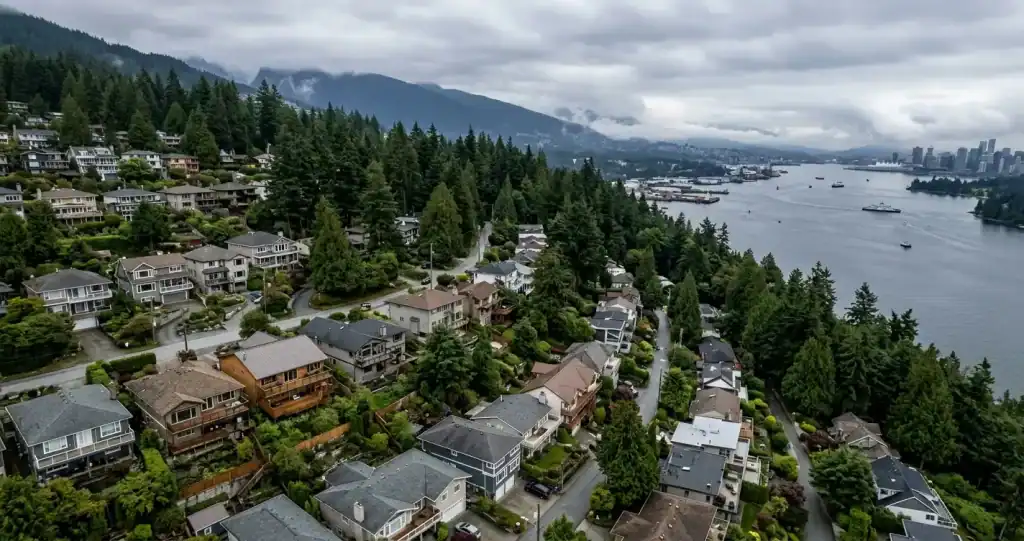
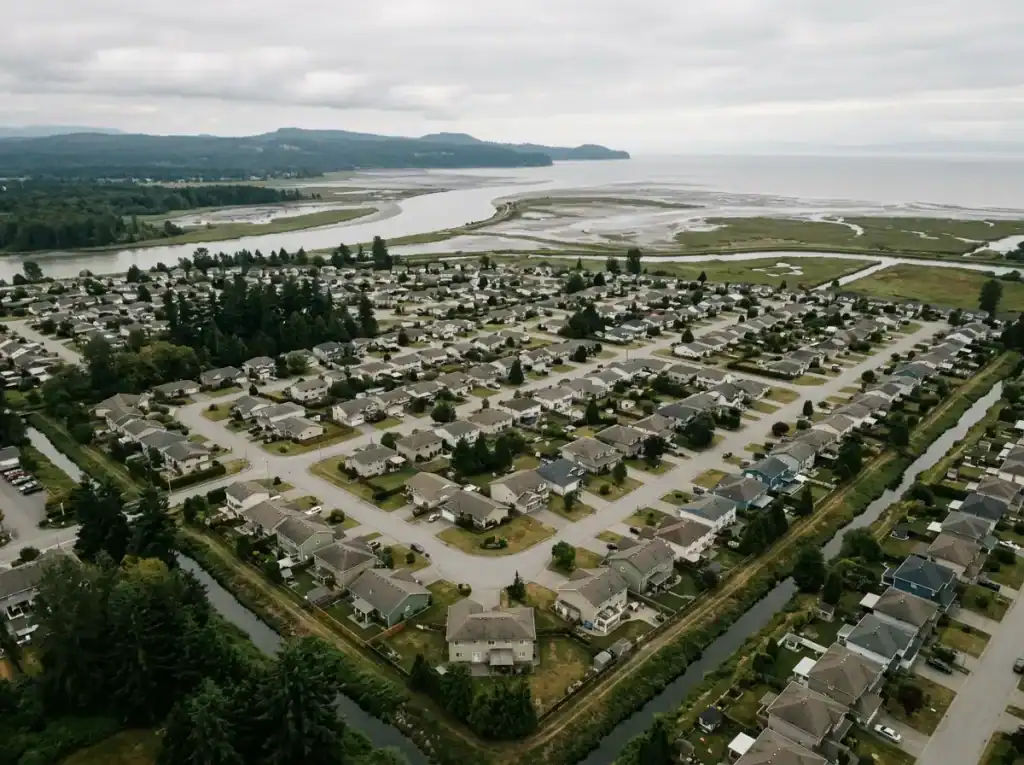
If you’re looking into foundation repair in Tsawwassen, the first thing worth knowing is that not all of the peninsula is the same ground. The upland areas (roughly the neighbourhoods near the bluffs and the ferry terminal) sit on older glacial material with better bearing capacity and better drainage. The lowland areas closer to Boundary Bay and the agricultural flats are on younger delta sediments: softer, higher water table, and more prone to consolidation under load. Where your house sits on that spectrum changes the conversation considerably.
What causes foundation problems in a lowland Tsawwassen home looks different from what causes them three streets uphill. It’s useful to know which category your property falls into before drawing any conclusions about what you’re seeing.
Delta Soil, Tidal Influence, and Flood Zone Risk
This section gets more specific about the ground conditions. Not to alarm anyone, but understanding the soil makes sense of why certain symptoms appear and why the repair process here can look different from other parts of Metro Vancouver.
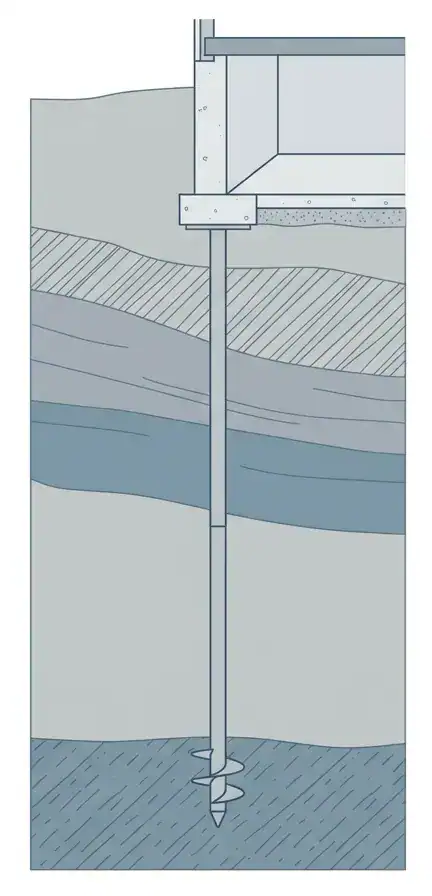
Delta sediments: The Fraser delta deposits are thick. Fine silts and clays overlie older glaciomarine material, and the soft layers can extend to significant depth in the lowland areas. Real-world foundation work in the Tsawwassen area has required pile installation to depths of 40 to 60 feet to reach adequate bearing capacity. Residential repairs vary by site, but in the lowlands, reaching stable ground means going deeper than a typical Fraser Valley job. Pile systems in soft delta soils need to reach below the compressible layers to find bearing capacity, and in parts of Tsawwassen, that means going considerably deeper than a typical Fraser Valley repair.
Tidal influence: Proximity to Boundary Bay means the groundwater table in the lowland areas responds to tidal cycles and seasonal rainfall. High and variable water tables keep soil soft and reduce its capacity to hold a load consistently. You won’t see your foundation move with the tide, but over years, the cumulative effect softens the ground and can accelerate consolidation and settlement beneath a structure. The tidal influence in Tsawwassen’s lowland areas doesn’t move your foundation directly. What it does is keep the water table high and variable, which softens the soil and reduces its capacity to hold a load steadily over the long term.
Flood zone and subsidence: Much of the Delta municipality, including Tsawwassen’s lowland areas, sits below 2 metres above sea level. The dyke system manages flood risk from coastal storm surges and Fraser flood events. On top of that, delta soils in this area experience ongoing consolidation, settling gradually as sediments compress under their own weight and under the weight of structures built on them. For a homeowner, this means the ground under a house may be slowly compressing even when nothing dramatic has happened.
This picture isn’t unique to Tsawwassen. The broader Delta foundation repair context covers similar conditions across the municipality, and foundation repair challenges in Delta gets into the flood zone and soft soil factors in more detail. Further up the valley, soft alluvial soils and what they mean for foundations tells a similar story in Pitt Meadows. The common thread is compressible ground that doesn’t hold a load the way glacial till or bedrock-supported soil does. Richmond homes on delta soil face the same challenge. Pile depths in Richmond can exceed 90 feet in some areas.
Foundation Repair in Tsawwassen: What the Process Looks Like
The starting point is always a free assessment. A technician visits the property, looks at the visible symptoms, evaluates the structure, and gets a feel for the site. Where on the peninsula the home is located, what the drainage is like, what the visible movement patterns suggest: all of that informs what the engineer needs to look at next.
In soft delta soil conditions like much of Tsawwassen, the engineer may recommend a soil investigation before finalizing the pile design. This is standard for delta locations. It’s not a sign that something complicated is happening. It’s the same process used in other soft-soil areas of Metro Vancouver. The engineer needs to understand the soil column to design a pile system that actually reaches adequate bearing capacity.
Helical pile systems are commonly used in these conditions. They can be installed to the required depth without large excavations, and torque verification during installation confirms that each pile has reached adequate resistance. Driven piers may also apply, depending on the weight of the structure and site access. Either way, pile selection is an engineering decision. The system appropriate for a given site is determined by soil conditions, structure weight, and access, not by homeowner preference.
For a closer look at how pile systems work in coastal and delta environments, helical piles on coastal properties covers the key considerations. And if you want to understand the broader category of what foundation underpinning involves, that page explains the process clearly.
Assessments are typically available within a few business days. Call 604-446-9967 or book yours online.
Warning Signs Tsawwassen Homeowners Shouldn’t Ignore
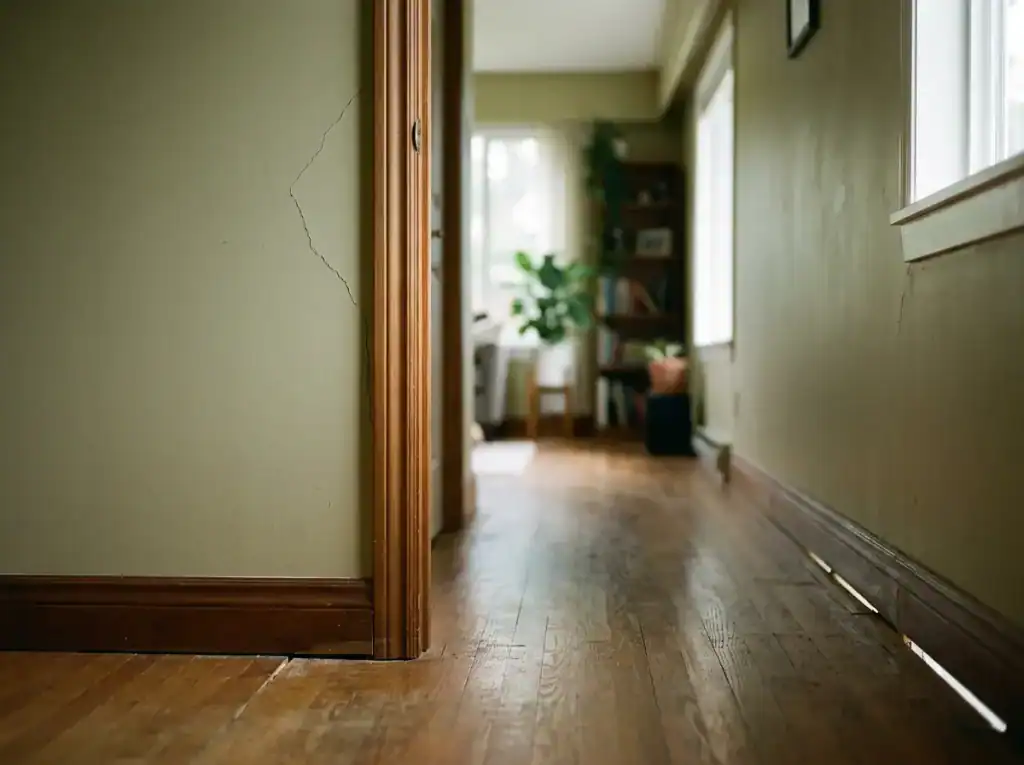
In soft delta soils, settlement tends to be differential. Different parts of the foundation settle at different rates, which produces recognizable patterns. Here’s how to read what you’re seeing.
Relax (cosmetic, no action needed):
- Hairline cracks in drywall from seasonal humidity changes
- Minor gaps at trim that come and go with the weather
- Doors that stick briefly in wet winters and loosen in summer
Monitor (document it, watch for change):
- Small diagonal cracks at door or window corners that have been stable for years
- Slightly uneven floors that haven’t worsened
- Minor gaps between wall and ceiling trim that seem to have stopped
Call Now (get a professional assessment):
- Doors or windows that stick consistently regardless of season
- Visibly sloping floors or floors that feel springy
- Diagonal cracks at corners that are widening over time
- Gaps between walls and ceilings, or between walls and floor trim, that are growing
- Foundation cracks visible from the exterior
- Soil pulling away from the foundation walls
- Water pooling near the foundation after rain
For the full picture of signs of a sinking foundation, that page covers the complete range of symptoms. The thing to understand in Tsawwassen specifically is that delta soil settlement is gradual. It doesn’t announce itself the way a sudden event would. The rate of change is what matters. Stable symptoms are useful information. Progressing symptoms are the signal to act.
If more than one item on that “Call Now” list sounds familiar, a free assessment is the right next step. Don’t try to diagnose this from a search engine. Call 604-446-9967 or book online.