
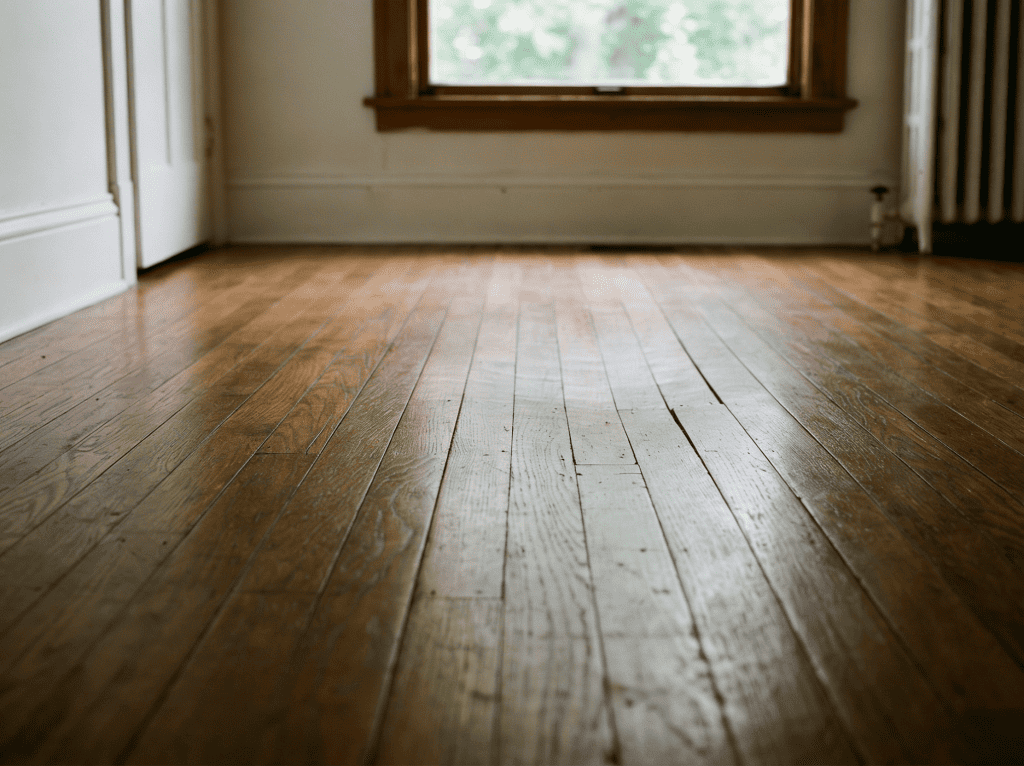
You’ve noticed it on the way to the kitchen: a soft spot in the floor, maybe a subtle bounce. Or the dining room slopes just enough to feel uncomfortable. The floor isn’t falling through. It’s just off.
For most, the next question is whether this is serious or manageable. The answer depends on what’s actually causing it, and that requires knowing the difference between a crawl space issue and a foundation issue. Sagging floors in BC homes usually start in the crawl space, not the foundation itself, but crawl space problems and foundation problems can look identical from inside the house. That distinction shapes both the solution and the urgency.
What Causes Sagging Floors in BC Homes
There are three main causes. They’re different problems with different fixes, and understanding all three is worth doing before assuming the worst.
Crawl space moisture and wood rot
BC’s wet winters are hard on unencapsulated crawl spaces. When a crawl space doesn’t have a proper vapour barrier, humidity builds up over the colder months. Floor joists and girders absorb that moisture season after season. The wood weakens, loses its stiffness, and starts to flex. The floor above follows. This is a maintenance and moisture control issue, not always a foundation problem, but rotted joists don’t recover on their own, and the problem tends to keep moving.
Support post settlement
Inside most crawl spaces, a series of posts or columns sit on concrete pads (or older brick footings) and hold up the main floor beam. When the soil beneath those pads shifts or compresses, a post drops. The girder sags with it, and so does the floor. In Surrey and Langley, clay soil expands and contracts with the seasons; that cycle affects not just the perimeter foundation but the posts and piers inside the crawl space that support your floors. Around Richmond and Pitt Meadows, peat and delta sediments compress gradually under load, which can have a similar effect on crawl space supports over time.
Foundation settlement
If the foundation itself is moving unevenly, the floor structure above moves with it. This is less common than the crawl space causes, but it tends to involve more significant repairs. To see what drives settlement across BC soils, check out causes of foundation problems.
These three causes can exist on their own or together. A home in Burnaby might have both post settlement and moisture-weakened joists at the same time. Sorting out which one is doing the most damage is part of what a proper assessment establishes.

How to Tell If Sagging Floors Are a Foundation Problem
This is the question most homeowners actually want answered. You’re standing in the living room trying to figure out whether you’re dealing with a subfloor maintenance problem or something structural.
If you’ve been asking yourself why your floors are uneven, the signals below help point you toward which category you’re in.
Signs that point toward crawl space or subfloor causes (not necessarily foundation):
- The soft or bouncy feel is concentrated in one area, especially near a bathroom, laundry room, or kitchen. Localized problems often trace back to plumbing leaks and the wood rot that follows.
- There’s a musty smell in the crawl space, or you can see condensation, mould, or standing water when you look in.
- The floor feels soft, but the rest of the house is completely normal. No sticking doors, no cracks, nothing else.
- Looking into the crawl space, you can see discolouration or visible softness on the joists or girders.
Signs that point toward foundation involvement:
- The slope runs continuously across a room or from one room into the next. A soft spot is local. A consistent slope that spans most of a room is often structural.
- Other symptoms are showing up at the same time. Sticking doors or windows, diagonal cracks in drywall, gaps between walls and ceilings, or uneven floors spreading across more of the house.
- The problem is getting worse month to month, not holding steady.
- When you look in the crawl space, you can see visible post settlement, a post that looks tilted, a gap between the top of a post and the girder above it, or a column that’s clearly dropped compared to its neighbours.
The combination-of-symptoms rule is the most useful thing to remember here. One soft spot near a known moisture source might be subfloor rot. But if you’re also noticing a door that’s started sticking, a crack above a window that wasn’t there last year, and your floors are softer now than six months ago, that’s a different conversation. Our article about the signs your house foundation may have settled will give you a view of the broader pattern of what foundation movement looks like across a home.
Not sure which category your situation falls into? That’s exactly what a free assessment is for. Call 604-446-9967.
Crawl Spaces, Clay Soil, and Why BC Homes Are Prone to This
A large portion of homes across the Fraser Valley and Metro Vancouver are built on crawl space foundations. It’s a standard construction method through older Langley, Maple Ridge, Abbotsford, and much of Burnaby’s suburban housing stock. That matters here because crawl space foundations require ongoing moisture management in a climate like BC’s, and a lot of them haven’t had it.
Unencapsulated crawl spaces accumulate moisture year after year in BC’s wet climate. Without a proper vapour barrier and adequate ventilation management, that moisture enters the wood framing. Joists that might last decades in a dry climate start degrading much sooner. The floor above gets softer slowly enough that homeowners often don’t notice it until the problem is well established.
In Surrey and Langley, clay soil is the other piece of the puzzle. In Surrey and Langley, clay soil expands and contracts with the seasons. That movement affects not just the foundation but the posts and piers inside the crawl space that support your floors. A post that was level when the house was built can be sitting on soil that’s shifted repeatedly over 30 years. Some of those posts settle and don’t recover.
Farther west in Richmond and Delta, the soil profile is different: peat and delta sediments that compress under load over time. The mechanism is distinct from clay shrink-swell, but the result for the floors above can look similar: gradual settlement, soft spots, and floors that slope toward one side of the house.
Older homes in Burnaby and New Westminster have their own version of this story. Original construction sometimes used wood posts or inadequate post spacing, and those systems have had decades to show their age.
When Sagging Floors Signal a Foundation Problem Worth Fixing
Knowing when to call and when to wait is often the most practical thing a homeowner can take away from this kind of article.
Call for an assessment when:
- The slope is measurable and you can tell it’s progressing. More than about 1 inch over 20 feet is a practical threshold, and a floor that’s getting noticeably worse over months is the key signal.
- Multiple symptoms are showing up in different parts of the house at the same time.
- You’ve looked in the crawl space and there’s visible post settlement, gaps between posts and beams, or severe joist damage.
- You’re planning to renovate, list, or refinance. A foundation inspection before renovation catches these issues before they surface at the appraisal stage.
It can wait (but document it) when:
- There’s one soft spot near a known moisture source and the rest of the house is completely normal.
- The floor has been like this for years and isn’t changing. A floor that’s been soft for years and hasn’t changed is a different conversation than one that’s getting noticeably worse, and that distinction is exactly what a professional assessment is there to clarify.
A few things to avoid:
- Shimming posts with wood. You’re adding the same material that’s already failing from moisture exposure.
- Treating crawl space issues as unrelated to the foundation. The crawl space and the perimeter foundation are part of the same structural system. Problems in one affect the other.
- Putting it off because the problem seems minor right now. Post settlement that’s addressed early tends to be a more contained repair than the same problem after several more years of movement. When the settlement is significant enough to require permanent stabilization, foundation underpinning becomes part of what the solution involves.


